Dry-Aged Black Angus Chop – the cut that leaves nothing to the imagination
Some cuts impress with their tenderness. And some cuts impress with their character. The beef chop impresses with both—the dry-aged Black Angus makes it incredibly tender and really brings out its character.
The beef cutlet —known internationally as a bone-in ribeye or côte de boeuf —is essentially a ribeye with the bone still attached. While this may sound trivial, it makes a big difference in practice: During cooking, the bone distributes heat differently, protects the surrounding meat from drying out, and imparts a flavor to the cut when seared that a boneless cut simply cannot achieve.
Combined with the ribeye’s characteristic fat cap and the natural marbling of Black Angus, the result is a cut that’s hard to beat on the grill or in a pan. Not because it’s the most expensive—but because it’s the most complete.
Why Black Angus—and why from Switzerland?
Black Angus is one of the best-known beef breeds in the world. The reason isn’t marketing, but genetics: This breed stores intramuscular fat differently than many other cattle. The result is finer, more even marbling—fat that isn’t between the muscles, but within them. This fat melts during cooking and provides juiciness and flavor that a lean cut simply cannot deliver.
Our Black Angus comes from Swiss pasture-raised herds. That means: no factory farming, no concentrated feed regimen designed for maximum weight gain. Pasture-raising affects the quality of the fat—pasture-raised animals have a more favorable fatty acid profile and a different meat color than barn-raised animals. You can taste the difference on your plate.
During dry aging, the meat is hung under controlled conditions at a constant temperature, humidity, and air circulation. Water slowly evaporates from the meat—the weight decreases, but the flavor becomes more concentrated.
At the same time, enzymes are activated that break down muscle protein chains. This makes the meat more tender—without marinade, without tenderizers, just through the passage of time. The result has a depth of flavor that fresh meat simply cannot achieve.
The Fat Eye – No Mistake, No Waste
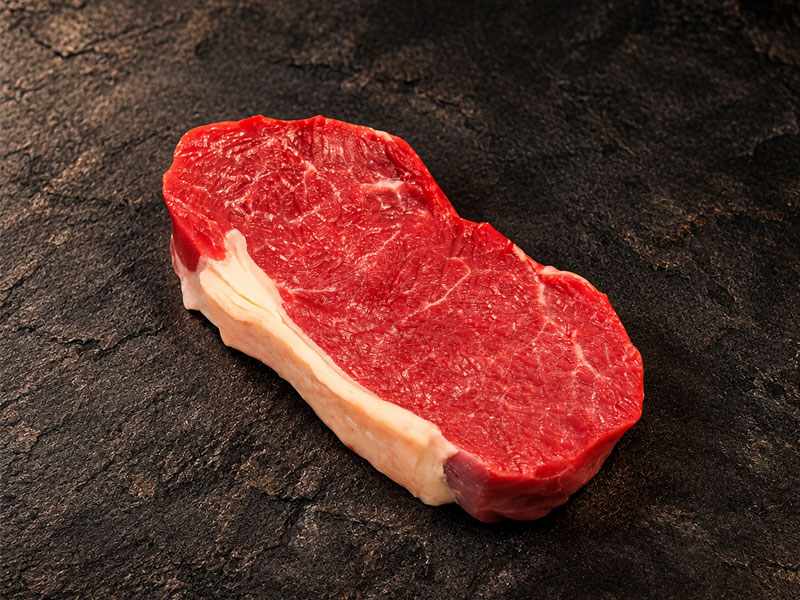
The ribeye has a distinctive fat eye: a bundle of muscle marbled with fat that immediately catches the eye. In some kitchens, it’s removed—but that’s a mistake. This fat melts during cooking, adding moisture and flavor to the surrounding meat, and is the real reason the ribeye deserves its reputation.
With Black Angus beef that has natural marbling, the fat marbling stands out even more. If you skip it, you're buying the wrong cut.
Preparation – Step by Step
The dry-aged Black Angus chop doesn't require any complicated techniques. It needs heat, patience, and a thermometer. What it doesn't need: marinade, pastes, or sauce. Those would only mask what you've paid for.
Core Temperatures at a Glance
| Cooking Level | Core temperature | Description |
|---|---|---|
| Rare | 48–52 °C | Red center, very juicy. Only for very fresh, top-quality meat. |
| Medium Rare | 54–57 °C ← Recommendation | Pink center, maximum juiciness. The sweet spot for dry-aged cuts. |
| Medium | 60–64 °C | Solid pink, less juice. For guests who don't like pink. |
| Well Done | 70+ °C | Fully cooked through. Not recommended—the effort involved in dry aging is hardly worth it in this case. |
700 g – for whom and for how many people
The Black Angus chop at DasFleisch.ch weighs about 700 g. That sounds like a lot. However, this is the natural size for this cut: a chop that’s too thin can’t be cooked properly because the surface will be done long before the center reaches the target temperature. 700 g is intended as a main course for two people —or for one person with a hearty appetite, if the chop is the centerpiece of the evening.
To serve: Carve at the table and arrange next to the bones. No elaborate side dishes are needed—just good bread, a little butter, and perhaps a simple green salad.
Our Black Angus is part of the same product line that we have been supplying to renowned Swiss restaurants since 2019—including The Dolder Grand and Restaurant Silex. With our online store, this product is now available for direct order. The product remains the same.
The Black Angus chop can be ordered directly from the shop—with delivery twice a week throughout Switzerland, shipped super-frozen at −40 °C. Free shipping on orders of CHF 350 or more.
What is the difference between a cutlet, a bone-in ribeye, and a côte de boeuf?
How do I cook a dry-aged pork chop?
How many people can a 700-gram pork chop serve?
Why is the cutlet dry-aged?
Where does the Black Angus beef come from?