Cutting Guide
How to Cook Black Angus Entrecôte Properly: Core Temperature, Grill, and Skillet
A Black Angus entrecôte is a steak that calls for high heat and precise cooking. With the right internal temperature, a nice crust, and a few minutes of resting, it stays juicy, flavorful, and just as pink in the center as you like it.

A good entrecôte doesn’t require complicated techniques, but it does call for attention to a few key details. The thickness of the steak, the starting temperature, the heat level, and the resting time all work together to determine the final result. Especially with a well-marbled Black Angus entrecôte, it’s worth measuring the internal temperature rather than relying solely on cooking times.
The product is sold at Das Fleisch as "Dry-Aged Black Angus" and has been aged for over 28 days. It is suitable for grilling and pan-frying, can be prepared as a steak, or cooked whole for carving. This guide focuses specifically on preparation. For purchasing, weight options, and product details, please refer to the product page.
What is an entrecôte?
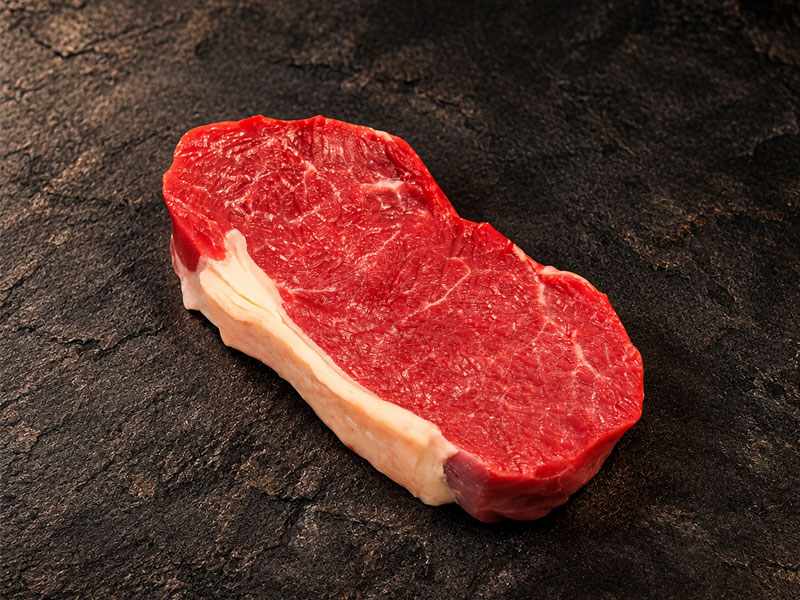
The entrecôte is a popular cut of steak from the back of the cow. In the Das Fleisch lineup, it falls between the ribeye and the tenderloin: it has more bite than the tenderloin but remains more tender than the ribeye. Its marbling and fat deposits contribute significantly to its juiciness and flavor.
The terms “entrecôte” and “ribeye” are not always used interchangeably, depending on the country, the cut, and the context in which the meat is sold. When it comes to preparation, the specific cut is more important than the label: thickness, marbling, and fat content determine the appropriate heat and cooking time. A good point of comparison is the Black Angus ribeye, which is also prized for its pronounced marbling.
Black Angus Entrecôte: What Makes the Difference?
With an entrecôte, fat isn't just a supporting player. The fine marbling is distributed throughout the meat and contributes to a juicy mouthfeel during cooking. The fat eyes add extra depth to the flavor. To let the fat play its part, the steak needs enough heat, but not an excessively long cooking time.
The cut matters, too: A steak of uniform thickness cooks more predictably and is easier to bring to the desired level of doneness. If you’d like to compare different cuts, you’ll find additional cuts in the Black Angus category that are suitable for both high, direct heat and low-and-slow cooking.
Marbling
Fine intramuscular fat enhances juiciness and flavor.
Grease trap
It adds depth, but should be used sparingly when cooking.
Cutting
A uniform thickness makes it easier to control the degree of doneness.
Temperature
When it comes to high-quality steak, a thermometer is more accurate than a set cooking time.
What does “dry-aged” mean when it comes to entrecôte?
"Dry-aged" refers to a maturation method in which meat is allowed to age under controlled conditions. During the aging process, it loses moisture, and the flavor can become more concentrated. The texture also changes. The entrecôte from Das Fleisch is listed as having been aged for over 28 days.
However, “dry-aged” is not automatically a guarantee of quality, nor is it necessarily better for every cooking method. Those looking for a cleaner, more intense beef flavor and a distinctive texture may really appreciate the aging process. The key factor remains that the cut is trimmed properly and suits the intended cooking method.
How to Prepare Entrecôte Properly
Before Cooking
Less preparation, more control
Remove the steak from the packaging, pat the surface dry, and check the thickness. A dry surface helps form a crust. A little oil is enough; a heavy marinade would often mask rather than complement a dry-aged entrecôte.
- Unwrap the steak before cooking and pat it dry thoroughly.
- Preheat the pan or grill completely before placing the meat on it.
- Use only a little oil; add the butter and herbs toward the end.
- Add salt just before cooking or right before serving, rather than letting the steak sit in salt for a long time.
Pan-fry the entrecôte
A heavy, well-preheated skillet is ideal for entrecôte. Don't add the steak until the skillet is hot enough. Sear both sides vigorously to form a flavorful crust. Then reduce the heat slightly so the inside can cook through evenly.
For a thicker steak, butter, rosemary, and garlic work well as a later addition. However, you shouldn't add them to the pan too early, because butter and herbs burn quickly over high heat. Remove the meat a few degrees before it reaches the target temperature and let it rest.
Grilling Entrecôte
On the grill, cooking begins over direct heat. This creates the crust that is the hallmark of an entrecôte. For thicker cuts, an indirect cooking zone is important: After searing, the steak can be gently finished there until it reaches the desired internal temperature.
Since fat can cause flare-ups when exposed to intense direct heat, keep a close eye on the steak. If the fat catches fire, briefly move the meat to the indirect heat zone instead of leaving it over the flame. This way, you’ll preserve the roasted flavors without letting the surface become bitter.
What is the ideal internal temperature?
The internal temperature is measured at the thickest part of the meat. This is the most reliable way to control the degree of doneness, regardless of the steak’s thickness or the heat source. The internal temperature often rises slightly during the resting period. Therefore, remove the entrecôte from the grill or pan before it reaches the desired final temperature.
| Degree of doneness | Core temperature | Result |
|---|---|---|
| Rare | about 48–50 °C | Deep red at the center, very soft. |
| Medium Rare | approx. 52–54 °C | Pink to reddish-pink, juicy and tender. |
| Medium | about 55–57 °C | Evenly pink; the fat melts easily. |
| Medium Well | about 58–60 °C | Less pink, firmer in texture. |
For the entrecôte from Das Fleisch, a medium doneness at about 56–58 °C is recommended. This is a good guideline for guests who want a pink steak but also want the marbling to melt pleasantly in their mouths.
Medium-rare or medium: Which goes better with entrecôte?
Medium Rare
Juicy and very tender
At 52–54 °C, the steak retains a deeper pink color. This works especially well with cuts of uniform thickness and when you want to highlight the meat’s natural texture.
Medium, at around 55–57 °C, is a good compromise for many entrecôte lovers. The meat remains pink, while the intramuscular fat warms up a bit more, which can make the steak taste richer. Which option is better is not a matter of quality, but rather a matter of personal preference and the specific marbling of the cut.
A accurately measured result is more important than the label indicating the degree of doneness. Especially when it comes to steak, the decision should be based on the thermometer and not on a fixed rule based on minutes.
How long should entrecôte rest, and how should it be sliced?
After cooking, let the steak rest for a few minutes. This allows the juices to distribute more evenly, so less escapes when you cut into it. Place it loosely on a warm plate or cutting board. Covering it too tightly will make the crust unnecessarily soft.
Next, cut the entrecôte across the grain. This shortens the individual fibers, making the steak seem more tender when you eat it. You can easily see the direction of the grain by the lines in the meat; don't cut parallel to them.
What side dishes and sauces go well with entrecôte?
Entrecôte has enough character on its own to pair well with simple sides. Potato gratin, rosemary potatoes, grilled vegetables, mushrooms, or a fresh salad all go well with it without overpowering the steak. If you serve a sauce, use it sparingly and don’t let it overshadow the meat.
Potatoes
Gratin or rosemary potatoes add texture and absorb the sauce well.
Mushrooms and Grilled Vegetables
Roasted flavors complement the steak without overpowering its texture.
Herb butter or gravy
Both complement the meat when served as a side dish rather than as the main course.
Chimichurri or salad
A fresh, herbaceous note provides a nice contrast to the marbling.
How much entrecôte per person?
For a main course, about 200 to 250 grams per adult is a good guideline. This also corresponds to the serving size listed on the product. For a steak dinner with few side dishes, a slightly larger portion may be appropriate; for a multi-course meal or one with hearty side dishes, a smaller portion may be sufficient.
The thickness of the steak is often more important than the number of pieces. A thicker cut is easier to cook to a pink center on the grill or in a pan than a very thin steak.
Buying Guide
What should you look for when buying?
The product page remains the place to check availability and view options. However, a few clear criteria can help with meal planning.
- Trace the origin, variety, and aging process.
- Make sure the meat has a good marbling pattern, a layer of fat, and is cut into even pieces.
- Choose the weight and thickness based on the number of guests and the method of preparation.
- Follow the storage and preparation instructions before cooking.
- Order a Black Angus entrecôte online when the cut, weight, and occasion are just right.
A Comparison of Other Black Angus Cuts
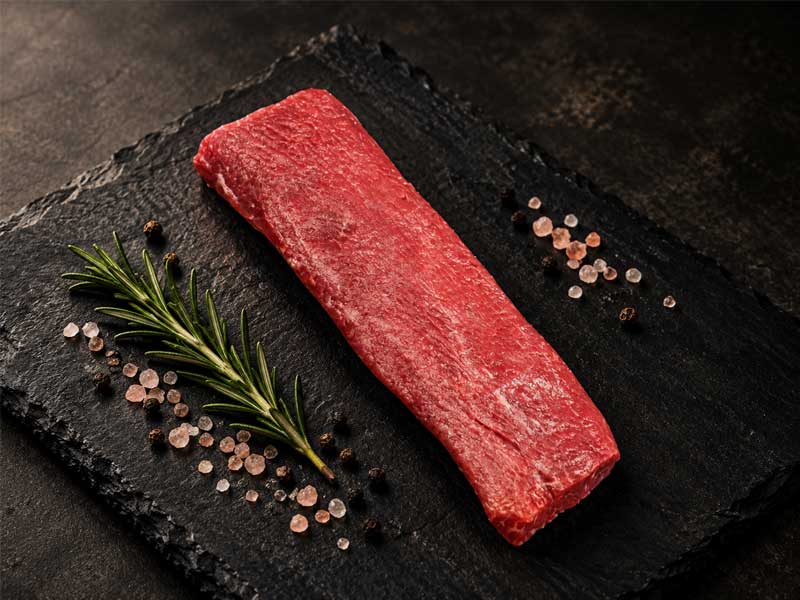
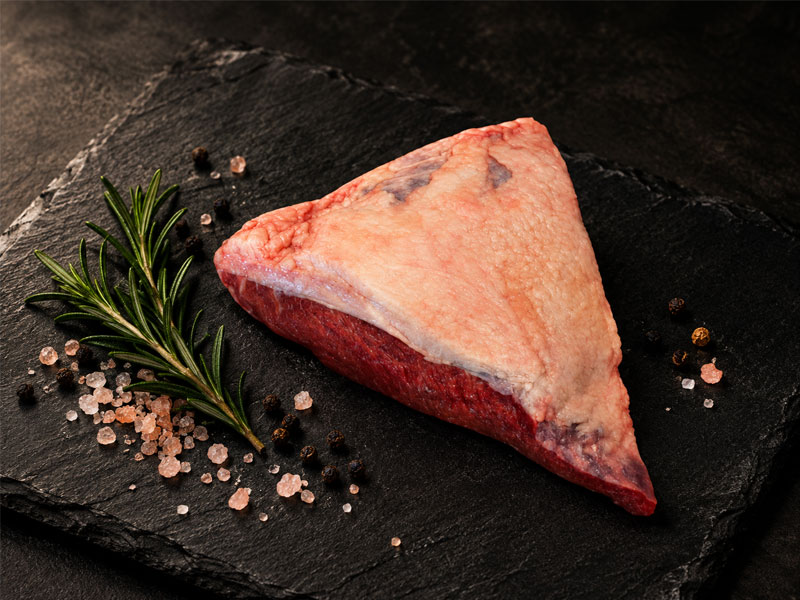
If you want to try different grilling methods, you’ll find useful alternatives in our selection. The rump cap (picanha) is usually cooked as a larger cut and then sliced later. Beef brisket, on the other hand, is meant for slow cooking at low temperatures and follows a completely different approach than a steak.
These differences make it easier to choose: Entrecôte and ribeye are best cooked over high, direct heat; picanha benefits from a layer of fat and a strategic cut; beef brisket requires patience and a “low and slow” approach. Not every cut is interchangeable, and that’s exactly what makes choosing so exciting.
Frequently Asked Questions About Black Angus Entrecôte
What is the ideal internal temperature for entrecôte?
For medium rare, the guideline is about 52–54 °C; for medium, it’s 55–57 °C. Since the temperature may continue to rise during the resting period, remove the steak from the grill or pan a little earlier.
How long should you cook an entrecôte?
A specific cooking time is of limited use because steaks vary in thickness. Sear the steak briefly and vigorously, then check the internal temperature and let the steak rest for the appropriate amount of time.
Can you grill entrecôte?
Yes. Start by grilling directly over the flame to sear the crust, and for thicker cuts, finish cooking them in an indirect heat zone until they reach the desired internal temperature.
What is the difference between entrecôte and ribeye?
The terms and cuts may vary depending on the market. Both are marbled steak cuts, but they differ in cut and fat distribution. Thickness and marbling are key factors in determining how to prepare them.
What does “dry-aged” mean when it comes to entrecôte?
"Dry-aged" refers to a controlled aging process. During this process, the meat loses moisture, allowing its flavor and texture to become more concentrated.
How thick should an entrecôte be?
A slightly thicker cut is usually easier to cook to medium-rare because a crust can form on the outside before the center reaches the target temperature. The actual thickness should always be taken into account when determining cooking time and monitoring the temperature.
Black Angus Dry-Aged
A good entrecôte doesn't require any complicated technique.
A clean cut, controlled heat, and the right internal temperature are key. Especially with well-marbled Black Angus, it’s worth using a thermometer rather than just timing by the minute.