Duroc Chop Guide
How to Cook a Duroc Pork Chop: Crust, Bone, and Controlled Heat
A bone-in pork chop requires high heat to sear the surface and a gentler cooking phase for the inside. Here’s how to cook Duroc pork chops in a pan, in the oven, or on the grill—using a thermometer instead of strict time guidelines.
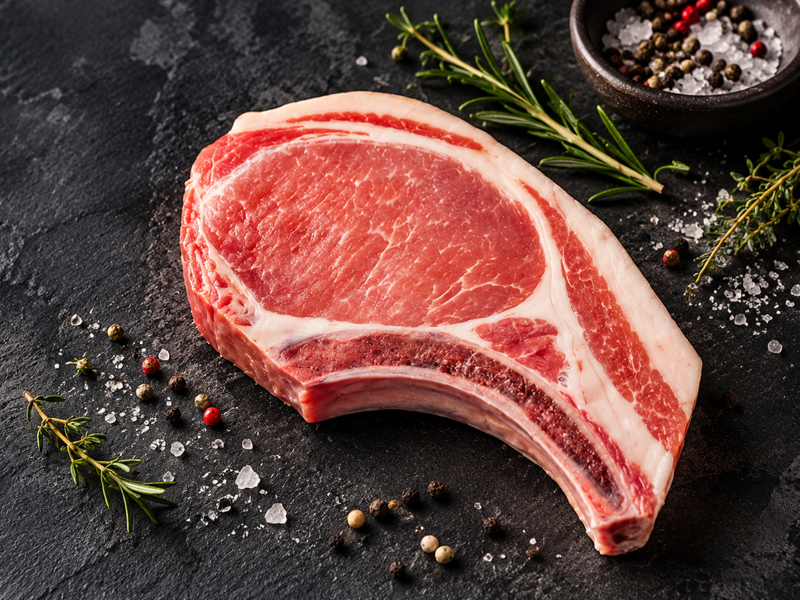
The most important decision comes before you even start cooking: How thick is the cut? A thin pork chop can often be cooked all the way through in the pan. A thicker cut will brown on the outside while the center still needs more time. If you try to cook both at the same high heat, you risk ending up with a surface that’s too dark and uneven cooking.
The Duroc pork chop from Das Fleisch comes from Swiss free-range pigs and, according to the product description, is dry-aged on the bone. This guide explains how to properly prepare this cut. You can find the current weights and prices listed directly with the product.
What's the difference between a Duroc chop and a tenderloin?
Duroc refers to a breed of pig. A chop, on the other hand, is a specific cut: it has a bone, a visible rim of fat, and a different shape than the elongated tenderloin. Therefore, preparation should be based on the specific cut, not solely on the breed name.
When cooking pork chops, it’s worth paying attention to their thickness and fat coverage. The bone makes it difficult to take an accurate reading if the thermometer tip is in direct contact with it. The pork tenderloin is leaner and is portioned differently; for that, we have our own guide to Duroc pork tenderloin. For pork chops, the focus here is on the combination of searing and controlled finishing.
01
Note the thickness
A thick cutlet doesn't necessarily take longer to cook. Thickness, starting temperature, and heat are also key factors.
02
Sear without oil
Carefully pat the surface dry before cooking.
03
Reduce Heat
After browning, finish cooking gently instead of letting the crust burn any further.
04
Measuring Correctly
Check the thickest part of the meat without touching the bone.
What does "dry-aged on the bone" mean?
The product page describes dry-aging on the bone. This refers to the processing of this cutlet; not every Duroc product is automatically dry-aged. When preparing the meat, the key factors are how the delivered cut has been trimmed and the storage instructions listed on the packaging.
An elaborate marinade isn't necessary. Salt as a base, with pepper or herbs added toward the end, is all you need for a simple preparation. If you'd like to learn more about the origin of the meat, you'll find the relevant background information in the article " Free-Range Pork Production and Quality."
Preparation
Before the first contact with the pan
Also, get the side dishes, a clean plate, and the thermometer ready. That way, the meat won't have to sit out in the rest of the kitchen later.
- Thaw gently: Thaw frozen meat in the refrigerator, covered, and follow the instructions on the package.
- Pat dry: Remove the packaging and dry the surface with paper towels. Do not rinse raw meat.
- Check the fat rim: If a firm fat rim causes the cut to bulge while frying, making small slits in the rim may help. Do not cut deep into the meat.
- Simple seasoning: Start with salt. Add pepper, butter, and delicate herbs only after reducing the heat.
- Keep them separate: Use separate plates and utensils for raw and cooked meat.
Pan-fry a Duroc pork chop
Heat a heavy skillet and add a small amount of heat-resistant cooking fat. Place the cutlet in the skillet and brown both sides. The skillet should be large enough so that the meat lies flat. It’s better to cook several pieces in batches rather than placing them close together.
Then reduce the heat. A thinner cutlet can finish cooking in the pan over moderate heat; turn it occasionally and check the thickness at its thickest point. For a thick cut, the oven is usually easier to control. Add the garlic and thyme only toward the end so they don’t burn during the initial searing.
Even brief contact between the edge of the fat and the pan can cause browning. To do this, hold the piece securely with tongs and watch out for splattering fat. Then continue cooking it flat.
Finish cooking a thick pork chop in the oven
For a thick cutlet, a two-step method works well: first brown it in a pan, then finish cooking it slowly in an oven-safe dish at about 120–140 °C (top and bottom heat). The oven temperature describes the method, not the meat’s safe doneness. What matters is the actual core temperature.
A fixed cooking time would be unreliable here. A flat piece with a large surface area behaves differently than a compact cut. Toward the end of cooking, check the thickness at several points—especially near the bone—without touching it with the tip of the thermometer. Let it rest briefly on a clean plate before serving.
Grilling Duroc Chops: Direct and Indirect Heat
Set up a hotter direct zone and a milder indirect zone. Brown both sides over direct heat. Then place the cutlet in the indirect zone and continue cooking there. A grill with a lid allows you to better control the ambient heat.
If fat drips into the coals and causes flames to flare up, remove the piece from that area. Prolonged contact with the flames makes the surface bitter and prevents even cooking. Even on the grill, the thermometer is the deciding factor; a crispy crust alone doesn’t indicate how well the center is cooked.
| Method | Suitable for | What should you look out for? |
|---|---|---|
| frying pan | Rather thin cutlets | After browning, reduce the heat and check the temperature regularly. |
| Pan and Oven | Thick slices | Use an oven-safe dish; determine the cooking time by measuring it. |
| Two-zone grill | Chops of varying thicknesses | Brown directly, then finish cooking indirectly; avoid direct contact with the flame. |
What is the ideal internal temperature for a pork chop?
The Swiss Federal Office for Food Safety and Veterinary Affairs recommends heating meat to at least 70 °C. For this guide, we are following this general safety recommendation. Insert the thermometer into the thickest part of the meat from the side, avoiding direct contact with the bone.
Don't rely solely on the color of the meat or on a specific cooking time. The degree to which the meat continues to cook while resting also varies from cut to cut. Before serving, check to make sure the recommended temperature has actually been reached.
Source: BLV: Food Safety, section “Proper Heating.”
Why does a pork chop get dry?
Cooking for too long without checking the temperature: Check early enough instead of cooking the meat for several extra minutes just to be safe. A thermometer helps prevent overcooking.
Treat the cut like a fillet: The bone and shape make a cutlet more irregular. Don't just measure at an easily accessible edge.
The surface will remain moist: Pat the meat dry before cooking, and don't overcrowd the pan. Otherwise, it will take longer for the meat to brown.
How many cutlets per person, and what side dishes go well with them?
The weight of a cutlet includes the bone. The product page states that one cutlet is enough for one to two people, depending on the side dishes. Therefore, check the specific weight listed for the item you’re purchasing instead of automatically ordering one cutlet per person. The appropriate portion size for two people with smaller appetites and several side dishes will differ from that for a meat-heavy main course.
In the fall and winter, sautéed mushrooms, mashed potatoes, roasted squash, or apple and red cabbage make great accompaniments. For a lighter meal, a salad and baked potatoes are enough. You can serve the sauce on the side—this helps preserve the browned surface when plating.
Before Placing an Order
Does the cutlet go well with your meal?
Choose based on the occasion and preparation method, not just on a product name.
- Choose a chop if you want a cut with bone and a rim of fat.
- Compare your current weight with the portion sizes that include the planned side dishes.
- Allow for a thick cut when cooking in the oven or using indirect grill heat.
- Follow the packaging instructions for thawing and storage.
- Have a thermometer and clean serving dishes ready.
Frequently Asked Questions About Duroc Chops
How long should a Duroc pork chop be cooked?
That depends mainly on the thickness, starting temperature, and heat. Brown both sides, then cook until done, checking periodically. The internal temperature is a more reliable indicator than a general time estimate.
Can I cook a thick cutlet in a pan alone?
Yes, over low heat and with regular temperature checks. For very thick cuts, using a combination of a skillet and the oven is often easier to control.
What is the recommended core temperature?
The BLV recommends a minimum temperature of 70 °C for meat. Take the temperature at the thickest part of the meat, without touching the bone.
Do I need to remove the greasy rim?
This isn't strictly necessary for cooking. Making small cuts in the firm edge can help if the meat puffs up while roasting. Do not cut deep into the muscle.
Is a Duroc chop the same thing as a Duroc tenderloin?
No. A chop and a fillet are different cuts. A chop has a bone and a visible rim of fat; a fillet is a leaner cut.
Where does the cutlet in *Das Fleisch* come from?
The product page mentions Swiss free-range farming and dry aging on the bone. Weights and availability are listed directly on the product page.
Swiss Duroc
A cutlet for the skillet, oven, or grill
Take a look at the available weights and choose the cut for your next main course. You'll find information on the origin and preparation right on the product page.