BBQ · Cut Guide
How to Properly Cook Beef Brisket in a Smoker: Preparation, Cooking Time, and Common Mistakes
It's Saturday night, the guests are about to arrive—and the beef brisket is still tough. With beef brisket, frantically turning up the heat at the last minute won't help. The key is choosing the right cut, maintaining a steady temperature, and allowing enough time before serving.
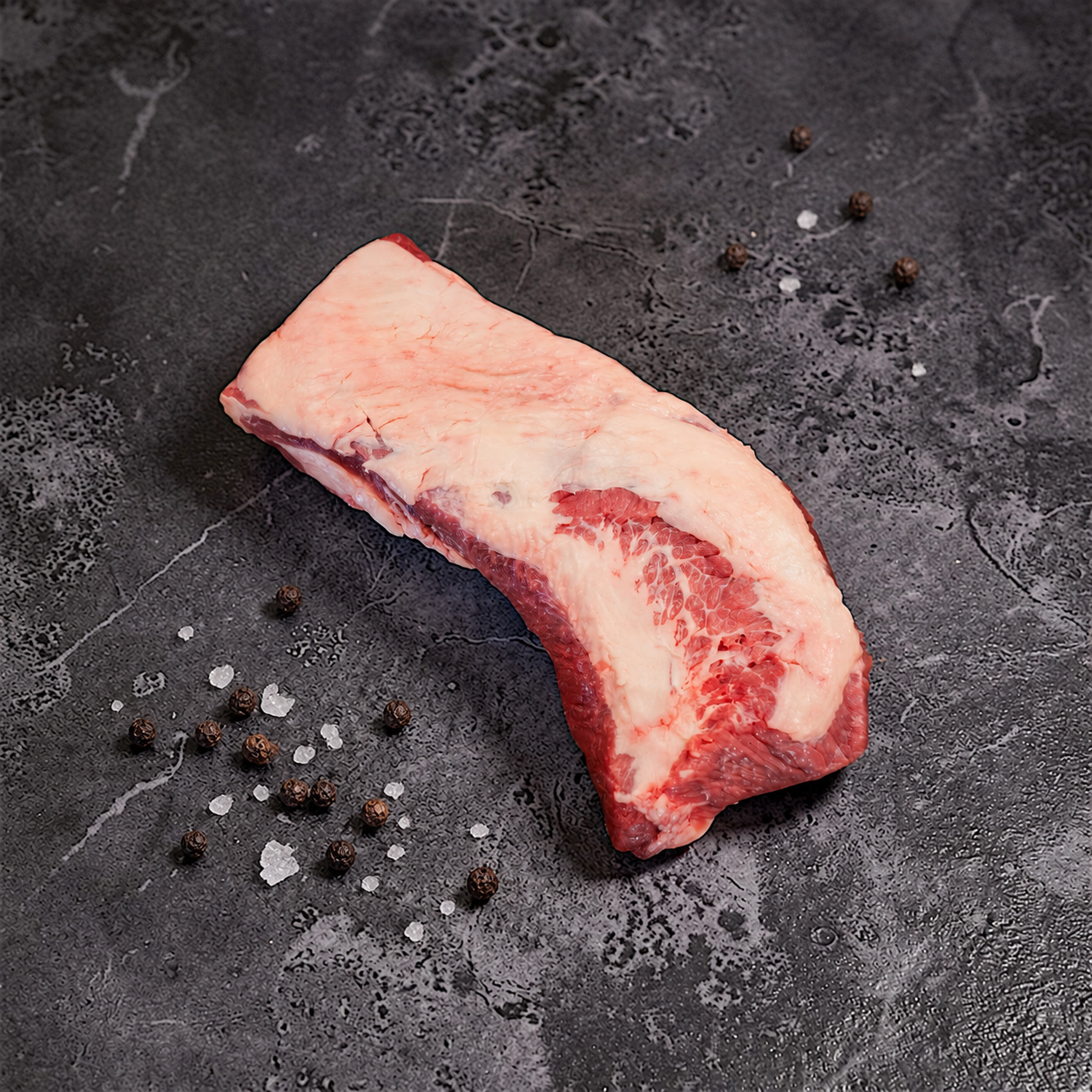
A good cut of Black Angus is a great starting point, but it’s no shortcut. In the smoker, beef brisket requires a different approach than a steak: low and slow instead of short, direct heat. If you consider the thickness, fat distribution, and portion size beforehand, you can plan your BBQ day with greater ease.
The Swiss Black Angus beef brisket from Das Fleisch is described as ideal for slow cooking, smoking, and braising. This guide explains the process from thawing to the finished slice—and why a temperature gauge alone doesn't guarantee a tender brisket.
01 · Cut
Beef brisket
A cut with plenty of connective tissue—not a steak meant for quick searing.
02 · Cooking Chamber
110–125 °C
Guidelines for this "Low & Slow" guide, checked at the grill.
03 · Texture
Often 90–96 °C
Orientation range at the core. The probe also checks for tenderness.
04 · Rest Period
Take into account
Do not cut directly; keep warm for extended periods only under temperature-controlled conditions.
What exactly is beef brisket?
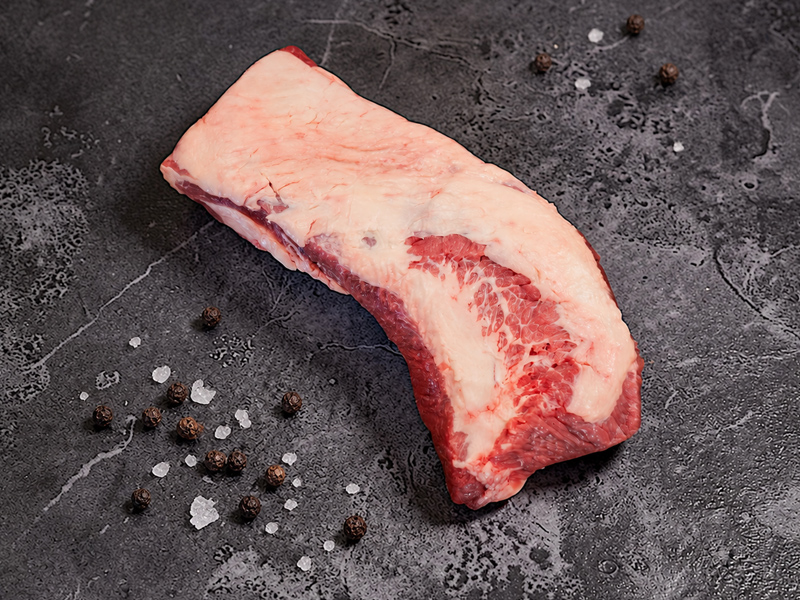
Brisket comes from the chest of the cow. This area is heavily worked and contains a lot of connective tissue. What remains tough when cooked quickly can become tender with longer cooking. This requires time and heat; simply heating the meat to a pink steak internal temperature is not enough.
Brisket is one of the classics of Texas BBQ. It’s typically cooked over indirect heat, smoked, and finished with a dark, spiced crust known as the “bark.” A rich crust can be dark, but it shouldn’t be burnt or taste bitter. The goal is a slice that holds together yet can still be pulled apart easily.
Flat, Point, or Packer: Which cut is on the grill?
A whole brisket consists of two muscles. The flat is flatter and usually leaner. The point is thicker, has more marbling, and partially overlaps the flat. A “whole packer” refers to a cut that includes both parts. Between them is a distinct layer of fat.
This makes a difference when cooking: A thin “flat” cuts out more easily than a thicker, fattier cut. The grain also isn’t uniform throughout. The product page for “Das Fleisch” doesn’t clearly specify whether a cut is a “flat,” “point,” or “whole packer.” Weight alone doesn’t answer this question. For a specific BBQ method, it’s therefore worth checking the cut details before placing an order.
Which cut of brisket is best for the smoker?
Make sure the meat is as uniform in thickness as possible and that it fits in your smoker with enough space between it and the hottest spots. Very thin edges cook faster than the center. Visible marbling and a reasonable amount of fat are helpful; however, a thick outer layer of fat is no substitute for fat distributed throughout the muscle.
The meat selection includes brisket from Swiss Black Angus cattle. Since the animals vary in size, the individual cuts also vary in weight. The available weights may therefore change from week to week. Please refer to the current selection on the product page. When comparing cuts, consider not only the weight in kilograms but also the shape, cut, and how it will fit on your grill. You can find additional cuts in the Black Angus Meat category.
How to Prepare Beef Brisket Properly
Let frozen brisket thaw completely in the refrigerator, in a dish that catches the meat juices as they drain. A large piece requires significantly more time to thaw than a steak. Do not proceed until the center is thawed as well. Do not leave raw meat on the counter for hours to bring it to room temperature, and do not wash it.
After unwrapping, pat dry with paper towels. Carefully trim off hard, thick pieces of fat and loose, very thin edges; do not remove every trace of fat. An even coating is better than a piece that has been completely trimmed bare. Take note of the grain direction or take a photo of it: it will be harder to see once the bark is applied.
Which rub goes with this?
Salt and coarsely ground black pepper are a classic starting point for Texas-style seasoning. If you like, you can add some garlic powder, paprika, or onion granules. The key is to season evenly—not to create a thick layer of salt. Pre-made rubs often already contain salt, so be careful not to add too much extra. An elaborate marinade isn’t necessary.
What temperature should the smoker be set to?
For this guide, a cooking chamber temperature of 110–125 °C is a practical starting point. If possible, take the temperature at rack level next to the meat, not directly against a hot wall. The lid thermometer may show a different temperature than the one at the cut. Minor fluctuations are to be expected; constantly adjusting the temperature often makes the cooking process more erratic.
The cooking chamber temperature and core temperature must be measured separately. The USDA recommends a controlled cooking chamber temperature range of approximately 107–149 °C for safe smoking. This is a general safety recommendation, not a guarantee that every brisket will turn out the same at every temperature. Use clean, suitable smoking wood and operate the smoker exclusively outdoors.
Smoking Beef Brisket: Step by Step
Setting Up a Smoker
Prepare the indirect heat and allow the cooking chamber to stabilize. Have enough fuel on hand for extended use. Adjust the air flow and, if necessary, the water pan according to the appliance's instructions.
Seasoning the brisket
Sprinkle the rub evenly over the piece of meat once it has thawed completely and been patted dry. While preparing the meat, keep raw meat juices away from side dishes, cutting boards, and serving utensils.
Place the meat on the scale and weigh it
Place the meat thermometer in the thickest part of the meat, not in a seam of fat. Position the fatty side toward the stronger heat source. For this placement, the design of your smoker is more important than a blanket rule like “always on top.”
Let a crust form
Keep the lid mostly closed. Monitor the temperature and the surface instead of constantly moving the meat around. Spraying isn't necessary; a wet surface takes longer to form a firm crust.
Classifying a Plateau Phase
If the core temperature rises more slowly, first check the oven temperature and the probe's placement. If both are correct, patience is often the best course of action. Don't instinctively turn up the heat too high.
Wrap if necessary
Don't wrap it until the crust is firm enough. Wrap it tightly in heat-resistant butcher paper or aluminum foil and continue cooking with the probe. Wrapping is an option, not a required step.
Check for tenderness
Check at several points in the area where the core temperature is highest. The probe should slide into the meat with little resistance. A single soft spot of fat or just a number on the display is not enough to make a decision.
Let it rest
Remove the finished brisket from the grill. If it’s very hot and tightly wrapped, open the wrapping briefly to allow the intense heat to dissipate. Then let it rest, covered, and keep an eye on the temperature.
Serve across the grain
Don't slice it until just before serving. Use a sharp knife and cut across the grain. Cut only as many slices as you need right away; the rest will be less exposed if left in one piece.
Brisket Core Temperature: When Is It Done?
Cooked through and BBQ-tender are two different things. The minimum temperature for a whole roast beef does not indicate the point at which its connective tissue has become sufficiently tender. With brisket, temperature, time, and the actual texture all come into play.
| Classification | Temperature | Meaning |
|---|---|---|
| USDA Minimum Recommendation for Roast Beef | 63 °C, followed by at least 3 minutes of rest | Focus on safety for whole cuts; do not aim for the typical brisket texture. |
| Plateau phase | Typically around 65–75 °C | The warming process may slow down. The start and duration vary. |
| Tender Low-and-Slow Brisket | Often around 90–96 °C | BBQ-based estimate; no guarantee. Also check the probe resistance. |
If the meat is still firm at 92 °C, don't remove it just because of that number. If it's already very tender, don't insist on cooking it further to 96 °C. Take measurements in several areas of the muscle, and distinguish between the resistance of the meat and that of a layer of fat.
When the display freezes
What happens during the plateau phase?
Moisture evaporates from the surface. This evaporation cools the meat and can slow down further heating—a phenomenon known as “stalling.” This does not automatically mean that the smoker is too cold or that the meat has turned out poorly.
You can continue cooking over a steady heat or wrap the meat once a sufficient crust has formed. Both options are possible. However, a tight serving schedule is not a good reason to suddenly cook the meat at a significantly higher temperature without proper control.
Wrapping: Butcher paper or aluminum foil?
Butcher paper allows more moisture to escape than tightly sealed plastic wrap. This makes it a good choice when you want to preserve the bark as much as possible. Be sure to use uncoated BBQ paper that is specifically designed for hot foods—not waxed packaging paper or just any craft paper.
Aluminum foil retains moisture more effectively and can speed up the final stage of cooking. This tends to make the surface softer. If you prefer a firm crust, weigh this effect against the time saved. Neither paper nor foil will automatically turn a piece of brisket that’s too lean, too thin, or already overcooked into a juicy one.
How long does beef brisket take in the smoker?
Plan for a long day of barbecuing with some leeway, not a schedule down to the minute. Thickness, cut, starting temperature, cooking chamber, wrapping, and the plateau phase all affect the cooking time. Kilograms alone aren’t a reliable guide: A flat cut behaves differently than a compact, thick cut.
You can’t simply apply the cooking time for a smaller cut proportionally to a larger one. On your first try, make a note of the weight, thickness, cooking chamber temperature, and how the process goes. These personal notes will be more useful for your smoker than someone else’s suggested cooking time without any details about the cut. The key indicator is tenderness, not the clock.
Planning Rest Periods and Keeping Food Warm Properly
A larger brisket needs time to rest after cooking before it is sliced. About an hour is a good rule of thumb, though not a fixed rule for every cut. Slicing it immediately allows more juice to run onto the cutting board; letting it rest for a while also makes it easier to cut clean slices.
A resting period is not the same as storing food for hours in an unmonitored cooler. To keep food warm for an extended period, the actual food temperature must be maintained at a minimum of 60 °C; the device display alone is not sufficient. This is the U.S. guideline for keeping food hot. Cool leftovers quickly in shallow containers and place them in the refrigerator within two hours at the latest; if the ambient temperature exceeds 32 °C, do so within one hour.
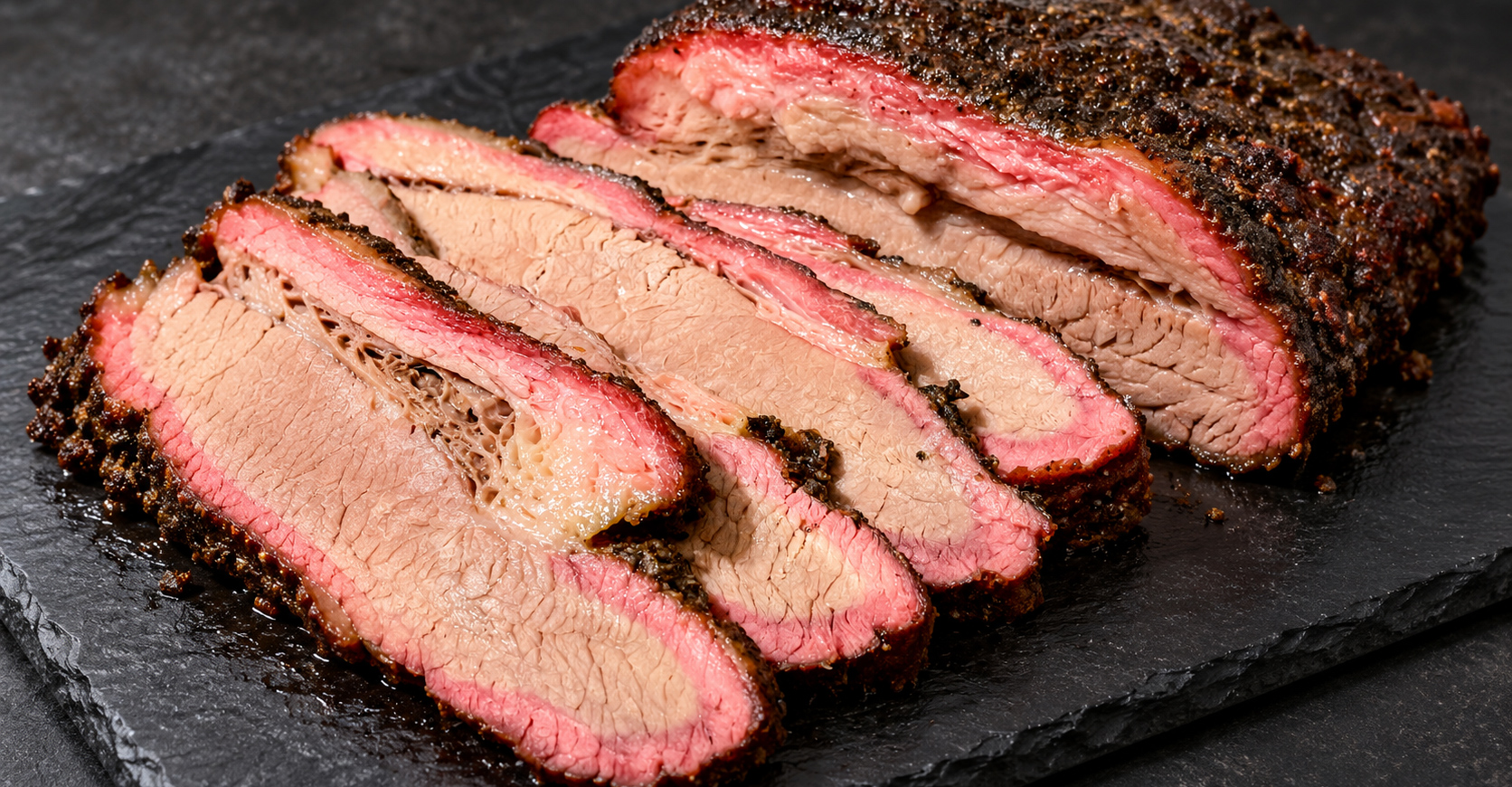
Crust on the outside.
Focus on the grain.
Slicing brisket: always across the grain
Long fibers make even well-cooked meat harder to chew. If you cut across the grain, the fibers are shortened. Use your observations before cooking as a guide, and check the grain again when you start cutting.
When preparing a cut with both the flat and the point, different cutting directions may be necessary. If necessary, separate the two muscles and turn them individually. Start with slices about the thickness of a pencil and adjust the thickness based on the texture: Very tender meat needs a little more structure. If the meat falls apart while cutting, thinner isn’t necessarily better.
The 7 Most Common Mistakes When Smoking Brisket
- Not allowing enough time. Defrosting, cooking, and resting all need to be factored into the plan. Start with a time buffer, and if cooking finishes early, keep the food warm in a controlled manner.
- Adjust the temperature gradually. Don't respond to small fluctuations with major adjustments. First, take a reading and monitor the trend.
- The center remains frozen. Let it thaw completely in the refrigerator before seasoning. A cold, hard center makes it difficult to cook evenly.
- Cut away too much fat. Remove hard excess, but don't blindly remove every layer of fat. Treat thin areas with particular care.
- Rely only on the clock or thermometer. The temperature determines when to stop; the low probe resistance also helps determine the endpoint.
- Slice it right off the grill. Plan for the resting period from the start, rather than skipping it entirely if you run late.
- Cut along the grain. Note the direction before seasoning. When switching between the flat and the point, check again and turn the cut.
Side Dishes and Quantities: Planning the BBQ Platter
Coleslaw, pickles, and a light potato salad add freshness to the hearty bark. Corn, baked potatoes, or BBQ beans turn it into a heartier meal. A sparing amount of BBQ sauce complements the meat without overpowering the smoky flavor.
As a generous guideline for a main course, allow about 200–300 g of cooked brisket per adult. If serving many side dishes or multiple meat dishes, adjust the amount downward accordingly. Raw weight is not the same as serving weight: trimming, fat content, and cooking loss all affect the yield. Therefore, do not count on a guaranteed yield for a specific number of guests.
If you're planning a barbecue without a long smoking process, Black Angus picanha is another option. It's not just a substitute for brisket, but a different cut with a different cooking method and texture.
Checklist Before Placing an Order
Check the origin, cut, weight, fat cover, and marbling. Also review the packaging and storage instructions, delivery date, thawing time, and available space in the smoker. The weights currently available are listed on the product page; if necessary, clarify the desired flat-to-point ratio in advance.
For more information on refrigeration, delivery, and selection, see the guide “Ordering Meat Online in Switzerland.” Having a clear plan is more helpful than just spontaneously choosing the largest cut available.
Frequently Asked Questions About Beef Brisket in the Smoker
How long does beef brisket take in the smoker?
Several hours; a large cut can take a whole day on the grill. Thickness, cut, temperature, and the plateau phase make it impossible to give a reliable general time estimate. Plan with some extra time and check for tenderness.
What is the ideal internal temperature for brisket?
For BBQ texture, the target temperature is often 90–96 °C, supplemented by a probe reading. The USDA’s minimum recommendation for roast beef—63 °C plus three minutes of resting time—is a safety guideline, not a target for brisket texture.
Does brisket have to be wrapped in butcher paper?
No. Paper can reduce evaporation and help preserve the crust better than plastic wrap. Brisket can also be cooked successfully without wrapping, though it often requires a longer cooking time. Wait until the bark is firm enough before wrapping it.
Why does my brisket turn out dry?
Possible causes include a thin, lean cut of meat, removing too much fat, cooking it for too long, or leaving the slices exposed for too long. If it is dry and firm at the same time, connective tissue that has not yet softened sufficiently may also be a factor.
What is the plateau phase?
A phase in which the core temperature rises only slowly. Evaporation from the surface slows down the heating process. Continue cooking while maintaining a stable oven temperature, or wrap the food once a crust has formed.
Can I cook brisket in the oven?
Yes. Slow cooking or braising is possible, but it doesn't produce the same smoky flavor without smoking. Be sure to check the internal temperature of the cooking chamber and the center of the meat as well; the braising liquid also affects the crust.
How do I cut brisket properly?
Cut across the grain and, if possible, just before serving. The flat and point sections may have different grain directions. Therefore, do not blindly cut the entire piece in the same direction.
Sources and Context
The temperature ranges for achieving the desired BBQ texture are guidelines, not guaranteed targets. References: Weber: Brisket and Low & Slow; Weber: Texas-Style Brisket; USDA: Smoking Temperatures; FoodSafety.gov: Safe Minimum Core Temperatures; FoodSafety.gov: Cooling and Holding Food Warm.
Good brisket takes time—and the right cut.
A successful beef brisket depends on the quality of the meat, a consistent smoker temperature, and the patience required for low-and-slow cooking. By keeping an eye on preparation, core temperature, and the resting period, you’ll lay the foundation for a juicy, flavorful BBQ result.
Discover our Black Angus beef brisket from Switzerland and plan your next BBQ with the perfect cut.