Cutting Guide
How to Cook Picanha: Fat Cap, Grill, and Core Temperature
Picanha is one of the most flavorful cuts for grilling and churrasco. With the right layer of fat, controlled heat, and a clean cut, the rump cap becomes an exceptionally juicy piece of meat.
What is picanha?
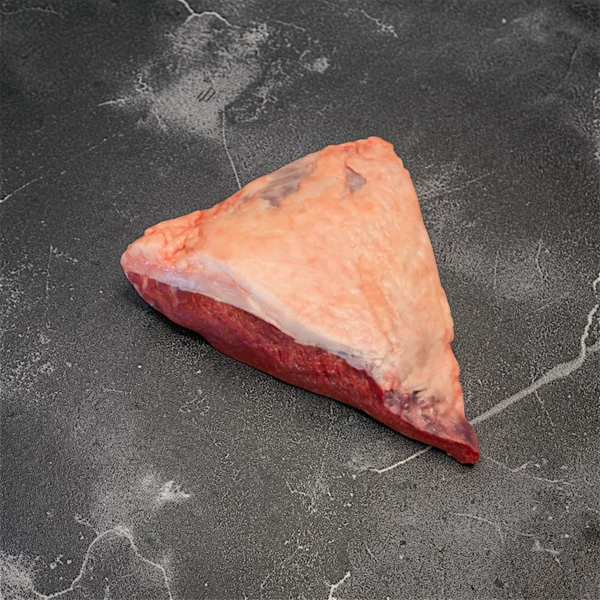
Picanha is a South American cut from the rear part of the beef rump. In Brazil, it is considered the centerpiece of a classic churrasco: rich in flavor, with a distinctive layer of fat, and ideal for grilling whole or on a skewer.
In German-speaking countries, picanha is often referred to as “Huftdeckel.” These terms describe the same cut, even though the way it is cut and trimmed may vary slightly from butcher to butcher. One thing is especially important for picanha: the fat cap must be left intact. It protects the meat during cooking and is an essential part of its flavor.
At Das Fleisch, you'll find this cut labeled as Black Angus Picanha / rump cap. This cut is ideal for anyone who doesn't just want to quickly sear a piece of meat, but rather wants to carefully control the heat, resting time, and initial cut when grilling.
Hip Cut
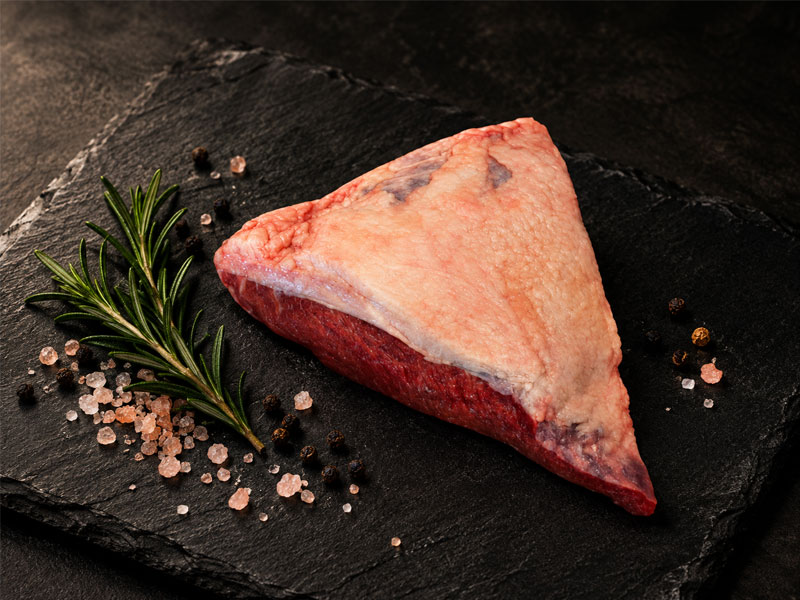
Picanha comes from the upper part of the beef rump and is usually sold as a triangular cut.
Grease cover
The even layer of fat protects the meat during cooking and gives the cut its characteristic flavor.
Versatile
Whether cooked as a whole cut, in thick steaks, or on a skewer: picanha works well in a variety of ways.
Against the Grain
Cutting it the right way after cooking makes all the difference between a good bite and a tough texture.
Why is the layer of fat so important in picanha?
With picanha, the fat cap is part of the cut. During cooking, some of the fat melts and adds to the meat’s juiciness and flavor. At the same time, it forms a protective layer, especially when the meat is first cooked indirectly or rotates on a skewer over the coals.
Therefore, do not remove it completely. If it is very thick, you can trim it slightly, but be sure to leave an even layer. Before grilling, you can carefully score the fatty side in a diamond pattern. Important: Cut only through the fat, not deep into the meat. This allows the fat to render more easily without the surface of the cut falling apart.
A strong marinade is rarely necessary for picanha. Coarse salt, a little time, and controlled heat are often enough to let the cut reveal its own character. Only after cooking should you add pepper or a light sauce, if desired.

Picanha vs. Top Round: Is There a Difference?
In everyday language, “picanha” and “Huftdeckel” are usually used interchangeably. Both terms refer to the layer of fat on the rear hip. “Picanha” is the Brazilian term; “Huftdeckel” is more commonly used among German-speaking butchers.
The cut may vary slightly depending on the butcher. What matters most for preparation isn’t just the name, but a clean, as even a cut as possible with the fat cap intact. A very thin cut cooks faster; for a thicker cut, indirect heat or a longer resting period is better.
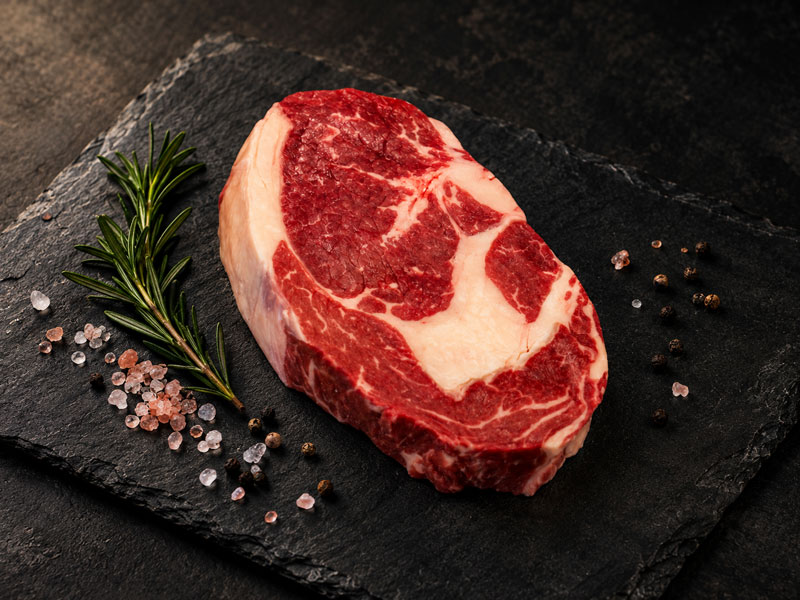
If you'd like to compare other cuts of beef, Black Angus also offers ribeye, entrecôte, filet, and other cuts, each with its own texture and ideal cooking method.
Black Angus Picanha: What Makes It Different?
When it comes to picanha, the quality of the raw meat and the cut play a key role. A good layer of fat, an even shape, and the meat’s texture make it easier to cook the cut in a controlled manner. Black Angus is often prized for its marbling and rich flavor.
That doesn't mean that more fat is automatically better. The key is a balanced distribution: The layer of fat should protect the meat, allow it to cook evenly, and ensure that the meat remains juicy when sliced. If you want to order Black Angus picanha online, you should therefore pay attention to the weight, cut, storage instructions, and recommended preparation method.
How to Prepare Picanha Properly
- Thaw slowly: Place frozen items in the refrigerator in advance and follow the instructions on the package.
- Bring to room temperature before cooking: Remove the meat from its cold packaging before grilling, and do not place it on the grill while it is still ice-cold.
- Pat dry: A dry surface helps develop a nice crust when searing.
- Check the fat cap: Do not remove it. If necessary, carefully score it in a diamond pattern without cutting into the meat.
- Season sparingly: Coarse salt is a classic choice. Add pepper only after cooking so it doesn't become bitter when exposed to high heat.
If you’re grilling a whole piece of picanha, make sure the thickness is as even as possible. This makes it easier to monitor the internal temperature reliably. A meat thermometer is more helpful for this cut than a set cooking time.
Grilling Picanha: The Classic Method
The classic grilling method combines direct and indirect heat. First, the fatty side is seared over direct heat. Then, the cut is cooked slowly in the indirect heat zone until it reaches the desired internal temperature. This allows the fat to render without the surface becoming too dark.
- Set up the grill with two zones: a hot direct zone and a milder indirect zone.
- First, sear the picanha with the fat side down over direct heat until the fat renders slightly and the meat begins to brown.
- Sear the meat briefly on the meat side as well to bring out the roasted flavors.
- Place it in the indirect cooking zone and let it cook, using a thermometer, until it reaches just below the desired core temperature.
- Let it rest for about 5 to 10 minutes before cutting into it. The temperature often rises slightly during this time.
Direct heat creates a crust and browns the meat, but it doesn't cook it all the way through. If you try to finish cooking a thick cut of picanha using only very high heat, you risk ending up with a surface that's too dark and an uneven result on the inside.


Churrasco-Style Picanha on a Skewer
When cooked on a skewer, picanha is traditionally cut into thick strips or curved pieces. The meat is folded so that the fat cap is on the outside, and then placed on a wide skewer. Turning it regularly allows the fat to render gradually and the surface to brown evenly.
Don't cut the meat too thin for this method. Thicker pieces stay more stable as they rotate and can later be sliced into thin strips directly from the skewer at the table. Only the outer, nicely browned layer is served; the rest can continue cooking. It is precisely this repeated slicing that makes churrasco such a convivial experience.
The fatty side should face outward. This allows it to absorb direct heat while protecting the meat. Use coarse salt sparingly and remove any excess crystals before serving.
Cooking Picanha in a Skillet
Even without a grill, picanha can turn out very well. Use a heavy skillet that can retain enough heat. Start by placing the fatty side down over medium-to-high heat. This allows some of the fat to render without burning right away.
Next, sear the meat on the cut side and, depending on its thickness, let it cook over lower heat or in the oven until it reaches the desired internal temperature. Then let the cut rest. A smaller, evenly thick cut is particularly easy to cook in a pan.
What is the ideal internal temperature for picanha?
The desired internal temperature is a matter of personal preference. Take the measurement at the thickest part of the meat, without placing the thermometer directly against fat or any bones. Remove the picanha from the grill or pan slightly before it reaches the target temperature, as the internal temperature may rise slightly while it rests.
| Degree of doneness | Core temperature | Result |
|---|---|---|
| Rare | about 48–50 °C | Very red at the core, soft and juicy. |
| Medium Rare | approx. 52–54 °C | Pink flesh, rich meat flavor, and good juiciness. |
| Medium | about 55–57 °C | Evenly pink, with a slightly firmer texture. |
| Medium Well | about 58–60 °C | Less pink, much firmer, and cooked through more thoroughly. |
How do you properly carve picanha?
The direction of the meat fibers is crucial when preparing picanha. Check them before cooking: The fibers do not always run in the same direction throughout the entire cut. If you cut the picanha into steaks before grilling, first cut the steaks along the grain. After cooking, cut the individual pieces into thin slices across the grain for serving.
Trimming the fibers makes the meat more tender. Don't cut into the meat right after cooking; let it rest first. This allows the meat juices to distribute more evenly throughout the piece and prevents them from pooling on the cutting board when you carve it.
How much picanha per person?
As a main course with side dishes, about 200 to 250 grams of picanha per adult is a good guideline. For a barbecue featuring several types of meat, salads, and side dishes, the amount can be a little less. If meat is clearly the focus of the meal, it makes sense to plan for a little extra.
When ordering, be sure to account for the fat cap and any trimmings. For two people, a smaller cut or a split cut may be sufficient; for a larger group, picanha sold whole or on a skewer is particularly convenient. The specific weight listed on the product page will help you plan.
What goes well with picanha?
Picanha doesn't need a heavy sauce. Chimichurri is a classic pairing, but a fresh herb salad, grilled potatoes, roasted vegetables, or simply fleur de sel also complement this cut well. The side dishes should enhance the flavor of the meat, not overpower it.
For a barbecue meal, picanha can be paired with a ribeye or an entrecôte. Those who prefer slow cooking will find that beef brisket offers a cut for a completely different—but equally exciting—barbecue method.
Before You Buy
What should you look for when buying picanha?
Considering these points will help you choose the right cut for the grill, skillet, or churrasco.
- Fat layer: It should be as intact and uniform as possible.
- Shape: A piece of uniform thickness is easier to cook evenly.
- Origin: The origin, breed, and product description should be clear.
- Weight: It must be appropriate for the number of guests and the desired method.
- Storage: Instructions for refrigeration and thawing should be clearly visible.
- Preparation: Allow for direct and indirect heat, as well as a resting period.
If you're ordering picanha online, you should consider not only the price but also the origin, cut, and quality of the fat cap.
Frequently Asked Questions About Picanha
Is picanha the same as rump cap?
In German-speaking retail, picanha is usually referred to as “Huftdeckel.” Depending on how it is cut, there may be slight differences, but the key characteristic is the cut’s typical layer of fat.
Do you have to remove the fat cap from picanha?
No. The fat cap is part of the picanha and contributes to its flavor and juiciness. If necessary, it can be carefully scored or trimmed slightly, but it should not be removed entirely.
What is the ideal internal temperature for picanha?
Many people prefer to cook picanha to about 52 to 54 °C for medium-rare. Remove the meat from the grill slightly before it reaches the target temperature, as the temperature will rise slightly while it rests.
How do you grill picanha properly?
The most reliable method is a combination of direct and indirect heat: sear the fatty side, brown the meat side briefly, and then cook indirectly until it reaches the desired internal temperature.
How much picanha do you need per person?
For a main course with side dishes, about 200 to 250 grams per adult is a good starting point. If there are many side dishes or additional types of meat, the portion size can be smaller.
Can you freeze picanha?
Frozen picanha can be stored until the date indicated. To thaw the meat, place it in the refrigerator and allow it to thaw slowly, following the instructions on the package. Raw, thawed meat should only be refrozen if the manufacturer's instructions permit it.
For Barbecue & Churrasco
Picanha thrives on its fat cap, the way it's cut, and controlled heat
Once you’ve prepared this cut properly, you’ll quickly understand why it’s so popular for churrasco. Discover our Black Angus picanha / rump cap right here in the shop.