How to Make Your Own Bluefin Tuna Sashimi | Akami, Chutoro, and Otoro
Some products don't require any elaborate preparation. All you need is a sharp knife and an eye for quality.
Bluefin tuna is one of the most sought-after tuna species in Japanese cuisine. Tasting its three different cuts—akami, chutoro, and otoro—is a particularly exciting experience.
From the intensely aromatic, deep-red akami to the finely marbled chutoro and the melt-in-your-mouth otoro, each cut offers a unique taste experience.
Served with high-quality soy sauce, wasabi, and pickled ginger, this creates an elegant sashimi platter that can be prepared at home in just a few simple steps.
Ingredients
- 100 g bluefin tuna akami
- 100 g Bluefin Tuna Chutoro
- 100 g Bluefin Tuna Otoro
- High-quality Japanese soy sauce from our online store
- Wasabi
- Pickled Sushi Ginger (Gari)
- Fine cress or microgreens
- Edible Flowers
- Thinly sliced daikon radish
- Shiso leaves
How to Prepare Bluefin Tuna Sashimi
Thawing Tuna Gently
Our bluefin tuna is delivered frozen.
Open or remove the vacuum packaging from the tuna before thawing it.
Then, cover the fish and let it thaw gently in the refrigerator at a maximum temperature of 4 °C.
After thawing, gently pat dry with paper towels and keep refrigerated until ready to use.
Remove the skin and coarse tendons
If there is any skin left on the tuna, carefully trim it off as thinly as possible using a sharp, flexible knife.
Guide the knife as close to the skin as possible so that as little of the precious tuna as possible is wasted.
Any coarse tendons can also be carefully removed.
Cut the tuna across the grain
Using a very sharp knife, cut the tuna across the grain into slices about 0.5 cm thick.
When doing so, guide the knife through the meat in a single, smooth stroke, rather than sawing back and forth.
This results in clean cut surfaces and preserves the delicate texture of the bluefin tuna.
A sharp knife is especially important when working with heavily marbled otoro.
Arranging and Serving Sashimi
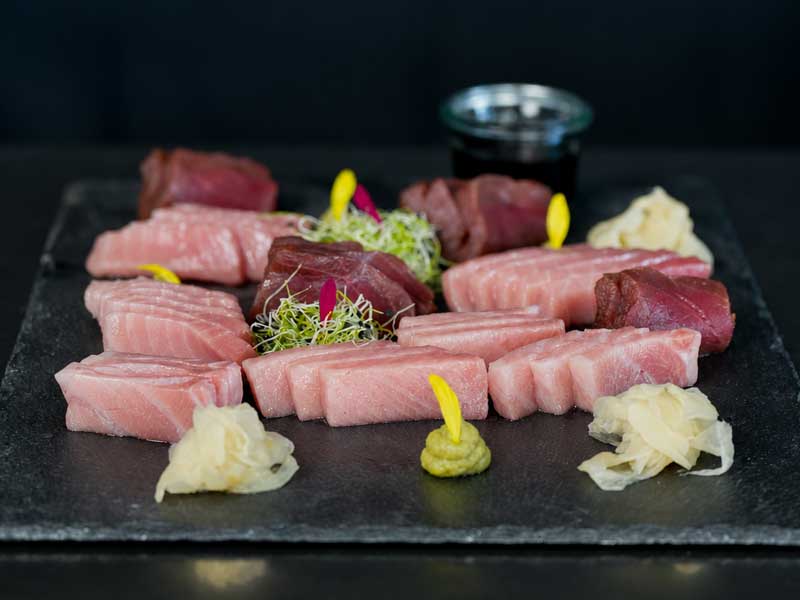
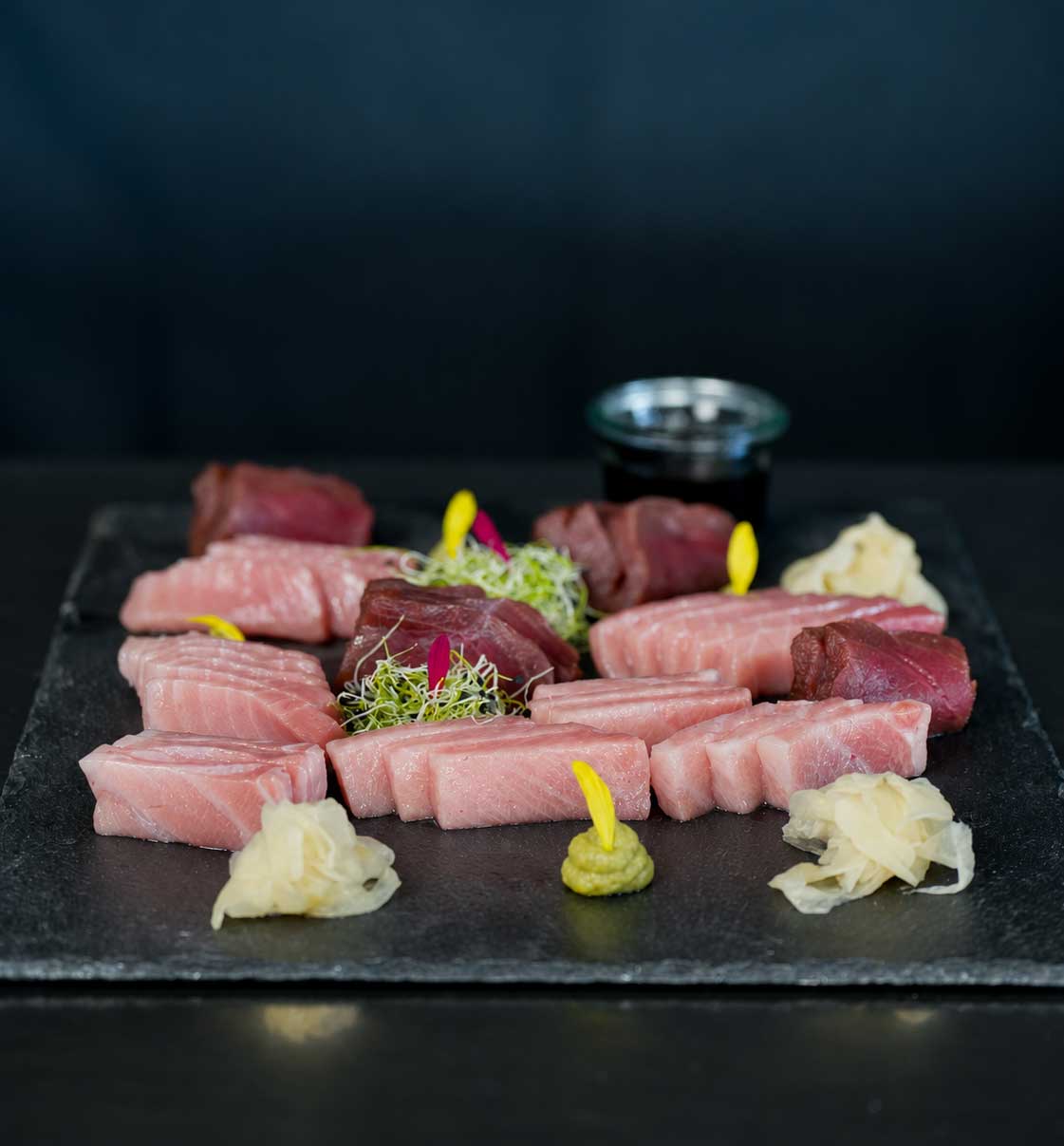
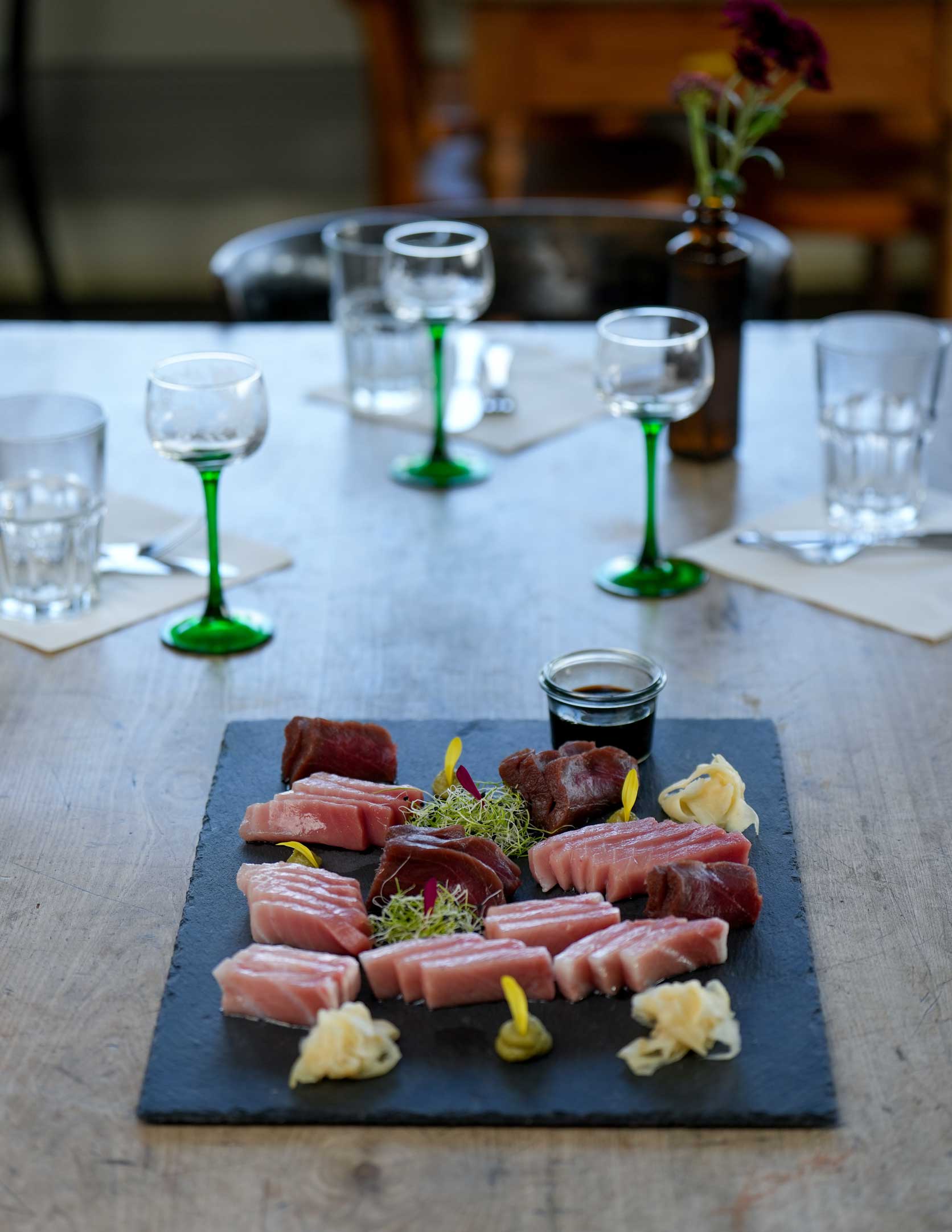
Arrange the akami, chutoro, and otoro loosely on a chilled plate or a nice slate platter.
The different colors and marbling patterns of the three cuts already create a visually appealing contrast.
Garnish with a little cress, microgreens, or edible flowers, and serve with soy sauce, wasabi, and pickled sushi ginger.
Cut open the tuna just before serving and enjoy it as fresh as possible.
Akami, Chutoro, and Otoro
Akami
Akami refers to the lean, deep-red muscle meat of the bluefin tuna.
It has a fine, firm texture and a distinct, characteristic tuna flavor.
Akami is perfect for classic sashimi, nigiri, sushi rolls, or tuna tartare.
Chutoro
Chutoro has a higher fat content than akami and combines the tuna's intense natural flavor with fine marbling.
The texture is particularly tender, without losing the characteristic tuna flavor.
For many sushi connoisseurs, chutoro offers the perfect balance of flavor, fat, and tenderness.
Otoro
Otoro comes from the particularly fatty belly of the tuna and is one of its most sought-after cuts.
Its distinct marbling gives it a buttery-tender, almost melt-in-your-mouth texture.
Otoro requires hardly any additional ingredients. A few drops of high-quality soy sauce or a small amount of wasabi are enough to bring out its unique flavor.
It's no coincidence that otoro is often referred to as the "Wagyu of the sea."
Taste the three cuts
If you're trying all three cuts together, you should start with the lean akami, then enjoy the chutoro, and finish the tasting with the particularly rich otoro.
This makes it particularly easy to notice the differences in flavor, marbling, and texture.
Akami → Chutoro → Otoro
Enjoy the pickled ginger between each bite to cleanse your palate.
The same goes for soy sauce: less is more. It should enhance the natural flavor of the bluefin tuna, not overpower it.
More Japanese Specialties Featuring Bluefin Tuna
In addition to a classic sashimi platter, all three cuts are perfect for preparing a variety of Japanese specialties.
Nigiri Sushi
Thin slices of bluefin tuna on hand-shaped, seasoned sushi rice.
Maki & Uramaki Rolls
Cut the bluefin tuna into thin strips and use them to make sushi rolls along with sushi rice, nori seaweed, avocado, or cucumber.
Temaki
Japanese, hand-rolled sushi rolls filled with tuna, rice, and fresh ingredients.
Tuna Tartare
Finely dice the akami and season it with a little soy sauce, sesame oil, scallions, and a bit of yuzu, if desired.
Tataki
Sear the akami or chutoro very briefly and thoroughly on all sides so that the inside remains raw. Then cut it into thin slices and serve it with ponzu sauce, for example.
Frequently Asked Questions About Bluefin Tuna Sashimi
What is bluefin tuna?
"Bluefin tuna" is the English term for bluefin tuna. In Japanese cuisine, it is particularly prized for its delicate texture, intense flavor, and the pronounced marbling of its fattier cuts.
What is the difference between sashimi and sushi?
Sashimi consists of thinly sliced raw fish served without rice. Sushi, on the other hand, is made with seasoned sushi rice combined with fish or other ingredients.
How thick should you cut tuna for sashimi?
For classic tuna sashimi, we recommend slices about 5 mm thick. Depending on your personal taste and the cut, the slices can also be a little thicker.
What's the right way to thaw bluefin tuna?
The tuna should be thawed gently under controlled refrigeration conditions, in accordance with the product-specific thawing instructions. Do not thaw at room temperature or in warm water.
Can you eat any kind of tuna raw?
No. For sashimi and sushi, only tuna that is expressly suitable for raw consumption and has been processed, stored, and transported accordingly should be used.
It is particularly important to maintain an unbroken cold chain. Even freezing does not eliminate all microbiological risks or histamine that has already formed.
Which cut is best for sashimi?
That depends on personal taste. Akami stands out for its intense, distinctive flavor, chutoro for its well-balanced marbling, and otoro for its particularly rich, melt-in-your-mouth texture.
We recommend comparing all three cuts side by side.
Which soy sauce goes well with sashimi?
A high-quality, traditionally brewed Japanese soy sauce works particularly well. It should have a well-balanced flavor and not overpower the delicate aroma of the tuna.
Is bluefin tuna healthy?
Bluefin tuna provides high-quality protein, omega-3 fatty acids, and various vitamins and minerals, including vitamin B12 and selenium.
While akami is relatively low in fat, chutoro and, in particular, otoro have a significantly higher fat content.
However, tuna can also contain elevated levels of mercury. Therefore, moderate consumption is recommended. Pregnant women, nursing mothers, and young children should follow the relevant dietary guidelines. Raw fish is also not suitable for particularly sensitive individuals.
How long can you keep thawed tuna?
For sashimi, we recommend preparing and enjoying the tuna on the same day, if possible, after it has completely thawed. Please follow the storage and consumption instructions on the packaging.
Related Products from Das Fleisch
Bluefin Tuna Akami
Deep red, finely textured, and rich in flavor. The classic choice for authentic Japanese sashimi.
Bluefin Tuna Chutoro
Finely marbled, wonderfully tender, and with a perfect balance between fat and an intense tuna flavor.
Bluefin Tuna Otoro
Distinctive marbling and an almost melt-in-your-mouth texture. A special treat for lovers of Japanese cuisine.
Japanese soy sauce
The perfect accompaniment to high-quality sashimi, nigiri, and homemade sushi.
Three cuts. Three distinct flavor experiences. An exceptional tuna.
Discover our bluefin tuna and experience the fascinating differences between akami, chutoro, and otoro.
For connoisseurs with an appreciation for quality and origin.